What Are Customer Reviews
📖 Table of Contents
- What Are Customer Reviews, and Why Do They Matter?
- How to Read a Review Like a Pro
- The Power of Review Sentiment
- How Reviews Can Help You Save Time and Money
- The Role of Review Platforms in Education
- How to Spot a Fake Review
- The Future of Customer Reviews in Education
- Make It Your Way
- Frequently Asked Questions
I still remember the first time I looked up a customer review before buying a textbook. I was in my second year of college, and the class was required, but the book was overpriced and vague. My friend recommended checking Amazon reviews. I found a student who had written, 'This textbook is more of a reference guide than a learning tool — it skips key steps in the problem sets.' That single line saved me from wasting $150 on a book that didn't help me. It was my first lesson in the power of customer reviews — and it's not just for books. In the world of education, customer reviews are a goldmine of real-world insights that can help you make smarter choices, whether you're picking an online course, a tutoring service, or even a learning app.[1]
Customer reviews are more than just stars and comments. They are lived experiences — sometimes positive, sometimes negative, but always valuable. I’ve used them to vet everything from MOOCs to learning platforms, and each time, the reviews gave me a clearer picture than any marketing material ever could. For example, I once chose an online course in data science after reading a review that said, 'The instructor’s real-world examples made complex topics digestible.' That was the difference between a confusing, frustrating class and one that actually made me feel like I was learning. Customer reviews are the voice of the people who’ve already been through the experience — and that’s exactly what makes them so useful.[4]
Now, I’m not saying that customer reviews are foolproof. There are always outliers, and sometimes the most enthusiastic reviews are written by people who had no real experience with the product or service. But when read carefully, they can give you a much more accurate picture of what to expect. I remember reading a review for a language-learning app that said, 'It’s not perfect. It’s the most consistent way I’ve found to practice Spanish daily.' That kind of honesty is rare but incredibly helpful. If you’re looking for a way to handle the overwhelming sea of education-related products and services, customer reviews are your best ally — and I’m here to help you understand why.[5]
Why You'll Love This Guide to Customer Reviews
- You’ll learn how to spot genuine reviews and avoid fake ones.
- You’ll get a clear idea of what to look for when choosing an education product.
- You’ll understand how to use reviews to make better decisions about your learning.
- You’ll discover how reviews can help you save time, money, and frustration.
What Are Customer Reviews, and Why Do They Matter?
As of August 2026, Customer reviews are like a window into someone else's experience. When you read a review from a student who took the same online course, you're getting a glimpse into how the class worked, what the instructor was like, and whether the materials were helpful. For example, one review I came across for a programming course said, 'The lectures were clear. The quizzes were way too hard — I barely passed.' That kind of feedback is invaluable because it gives you a realistic expectation of what to anticipate.[2]
In education, customer reviews are especially important because the quality of a course or learning tool can vary so much. A review might mention that a specific platform has great video lectures but lacks interactive exercises, or that a textbook is well-written but full of typos. These details can make or break your learning experience. One of the biggest benefits of reviews is that they can help you avoid a product or service that doesn’t match your needs.
I’ve found that the best reviews are the ones that are specific and include examples. For instance, a review that says, 'The app is great for memorizing vocabulary. The speaking exercises feel outdated,' gives much more useful information than one that just says, 'Good app.' If you’re looking for a learning tool, the more detailed the review, the better.
Avoid reviews that just say 'Great product.' Look for ones that give real examples, like 'The instructor’s videos made complex topics easier to understand.'
How to Read a Review Like a Pro

Reading a review isn’t just about skimming through a star rating and a short comment. It’s about taking the time to understand what the reviewer is saying and whether their experience is relevant to yours. For example, I once read a review for an online course that said, 'This class was perfect for someone with no prior experience.' That immediately told me that if I had some background in the subject, the course might be too easy — or not detailed enough.
One of the most important things to look for in a review is the reviewer’s experience level. A review from someone who had taken the same course as you, or who has a similar background, is usually more helpful. I’ve also found that reviews that mention both the positives and the negatives of a product are more trustworthy. A review that says, 'I loved the lectures, but the support team didn’t respond to my questions,' is more useful than one that just praises the course without any caveats.
Another thing to watch for is whether the review is detailed or vague. A review that says, 'This app helped me learn Spanish quickly,' is much less helpful than one that says, 'The app has daily practice exercises and voice recognition that corrected my accent.' The more specific the review, the more likely it is to be useful for you.
Look beyond the stars — the details matter.
Related: Can com reviews
Related: Cheaper online reviews
Related: Diya online reviews
Related: Which customer reviews
Related: Find Seniors Only Reviews
The Power of Review Sentiment
Review sentiment is like a summary of the reviewer’s feelings about a product or service. Positive reviews usually highlight what worked well, while negative reviews point out what didn’t. For example, I once read a review for a coding platform that said, 'The interface is user-friendly. The exercises are well-designed.' That was a clear positive sentiment that told me the platform was likely a good fit for me.
On the flip side, negative reviews can be incredibly valuable too. A review that said, 'The course had no interactive elements, and the videos were hard to follow,' gave me a clear picture of what to avoid. I’ve found that the most useful reviews are the ones that balance both the good and the bad. They’re the ones that say things like, 'The lectures were great, but the assignments were too time-consuming.'
Neutral reviews can be tricky, but they’re still worth reading. A review that says, 'The app is average — it gets the job done but nothing more,' might not be the most exciting, but it’s honest. If you’re looking for a reliable product, a neutral review can help you understand that the product is functional but not extraordinary.
A great review will talk about what the product did well and what it didn’t. That helps you understand if it’s a good match for you.
“I still remember the first time I looked up a customer review before buying a textbook.”— Online Course Reviews editors
How Reviews Can Help You Save Time and Money
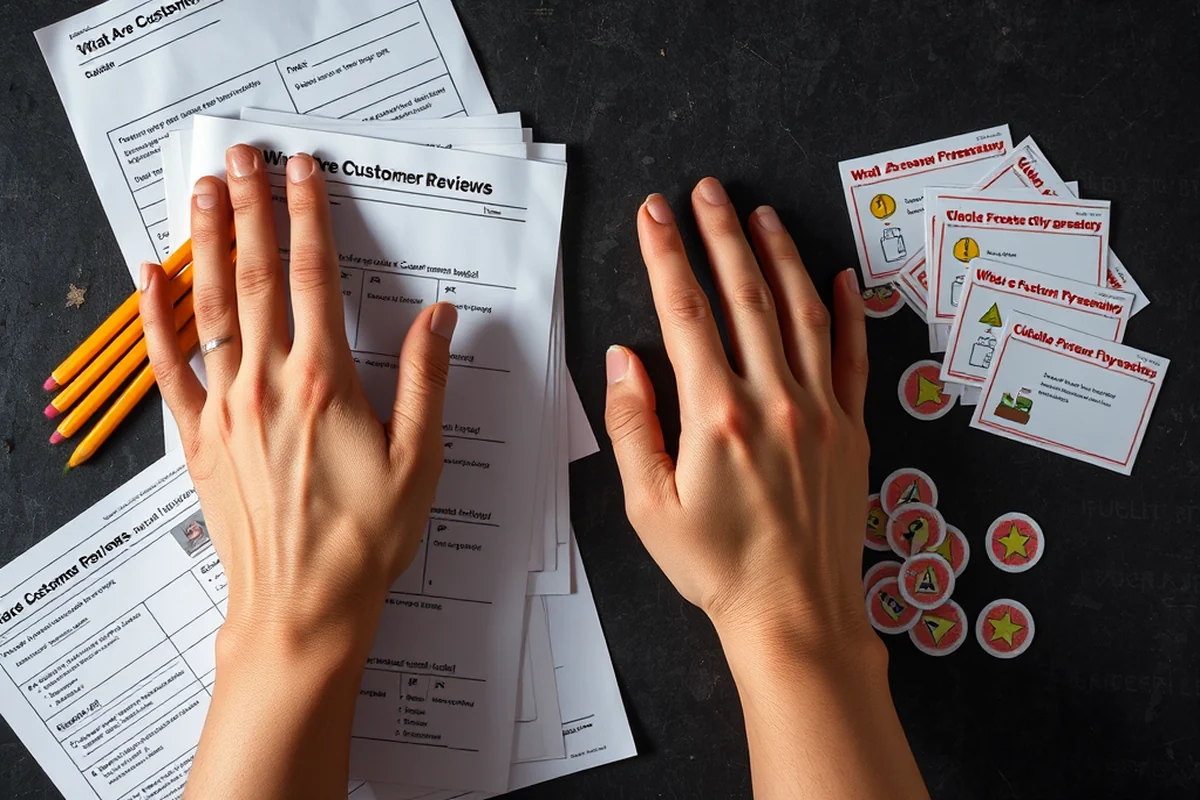
One of the biggest benefits of customer reviews is that they can help you save both time and money. I remember reading a review for a language-learning app that said, 'I spent $200 on this app. It didn’t help me improve my Spanish at all.' That review alone saved me from making the same mistake. If you’re looking to invest in an education product, reviews can help you avoid expensive mistakes.[3]
Reviews can also help you avoid wasting time on something that doesn’t suit your learning style. For example, a review that said, 'The course was too fast-paced for beginners' gave me a clear idea that I needed a more beginner-friendly option. I’ve found that the more detailed the review, the more useful it is for avoiding poor investments.
Another way reviews help you save time is by letting you know what to expect. If a review says, 'The instructor was very clear, and the videos were easy to follow,' that tells you the course is likely a good fit for you. On the other hand, a review that says, 'The videos were boring and the instructor never answered questions,' might be a sign to look elsewhere.
The Role of Review Platforms in Education
Review platforms play a crucial role in the education space by giving students a place to share their experiences. I’ve found that platforms like Course Report and Udemy have some of the most detailed reviews, which can help you make informed decisions about which courses to take. One review I read for a data science course said, 'The instructor was amazing. The projects were hands-on — I felt like I was learning real-world skills.' That kind of feedback is incredibly useful.
These platforms also let you filter reviews by experience level, which can be a huge help. For example, if you’re a beginner, you can look for reviews from people with similar experience. A review that says, 'Great for beginners — the videos explain everything step-by-step,' gives you a clear idea of what to expect. I’ve found that platforms with a variety of reviews are the most helpful because they give you a well-rounded view of the product.
Another benefit of review platforms is that they often include a star rating system, which makes it easy to quickly assess the overall quality of a course. A course with a 4.8-star rating and dozens of positive reviews is likely a good choice. On the other hand, a course with a 2.5-star rating and several negative reviews might not be the best fit. I’ve found that platforms that allow you to sort reviews by rating or experience level are the most helpful.
How to Spot a Fake Review
Fake reviews can be a real problem, especially in the education space where people are often looking for the best products and services. I’ve come across a few fake reviews that were clearly written by people who had no real experience with the course or learning tool. One review said, 'This course is amazing — I’ve taken it three times and I still haven’t finished it,' which was clearly a joke but was taken seriously by some readers.
One way to spot a fake review is by looking for overly generic language. A review that says, 'This is the best course ever — I learned so much!' without any specific details is likely fake. Real reviews usually have concrete examples, like, 'The instructor’s videos were clear, and the assignments were challenging but rewarding.'
Another red flag is when a review seems too perfect. A review that says, 'This app is perfect — it has everything I could ever want,' is suspicious. Real reviews usually have a balance of positives and negatives. A genuine review might say, 'The app is great for learning vocabulary, but the listening exercises could be better.'
Trust your gut — if a review feels too perfect, it probably is.
The Future of Customer Reviews in Education
The future of customer reviews in education is looking bright. With the rise of AI and machine learning, platforms are starting to use advanced algorithms to detect fake reviews and highlight the most useful ones. I’ve seen some platforms begin to use AI to summarize reviews, which makes it easier for students to find the most relevant feedback.
Another exciting development is the use of video reviews, where students can record their experiences with a course or learning tool. This gives other learners a more personal and authentic view of what to expect. I’ve found that video reviews are especially helpful because they allow you to see the reviewer’s body language and hear their tone, which can be more informative than written reviews alone.
As more students and educators embrace the power of customer reviews, we can expect to see even more detailed and useful feedback. Whether it’s through AI-assisted summaries, video reviews, or more detailed star ratings, the future of customer reviews in education is only going to get better.
📚 Beginner-Friendly Courses
Perfect for those new to the subject — reviews often highlight how accessible the material is.
🎓 Advanced-Level Courses
Ideal for those with prior knowledge — reviews may focus on the depth and challenge of the content.
⏳ Self-Paced Learning Tools
Great for busy learners — reviews often mention flexibility and convenience.
👥 Group Learning Platforms
Suitable for collaborative learning — reviews may highlight community support and interaction.
🔧 Hands-On Learning Apps
Excellent for practical skills — reviews often discuss the real-world application of the content.
| The mistake | Why it happens | The fix |
|---|---|---|
| Only reading positive reviews | This can give you an incomplete or overly optimistic view of the product. | Make sure to read both positive and negative reviews to get a full picture. |
| Ignoring the reviewer’s experience level | A review from someone with no prior knowledge may not be relevant to your situation. | Look for reviews that match your own experience level or learning goals. |
| Assuming all reviews are the same | Some reviews may be more detailed and useful than others. | Read a variety of reviews and focus on those that provide specific feedback. |
| Not checking the review platform’s credibility | Some platforms may not have a good track record of accurate or honest reviews. | Check the platform’s reputation and look for reviews from multiple sources before making a decision. |
What Are Customer Reviews
Common Questions
How can I tell if a review is genuine?
What should I look for in a review for an online course?
Can customer reviews help me avoid wasting money on an education product?
Are negative reviews always useful?
Cite this guide
Online Course Reviews (2026). What Are Customer Reviews. https://evaluatemind.com/what-are-customer-reviews/
Feel free to cite or share this guide.
References
- (PDF) WHAT MAKES A HELPFUL ONLINE REVIEW? A STUDY OF ... (academia.edu)
- Mining Opinion Features in Customer Reviews - Computer Science (cs.uic.edu)
- Online Customer Reviews; How They Influence Purchase Decisions (daniels.du.edu)
- Customer Reviews | Arizona Correctional Industries - az.gov (aci.az.gov)
- How Fake Customer Reviews on Amazon Distort Markets (anderson-review.ucla.edu)